




- Home
- Our Services
- Dizziness, Vertigo & Balance Testing in Charlotte, NC
Dizziness, Vertigo & Balance Testing in Charlotte, NC
Dizziness, Vertigo & Balance Testing in Charlotte, NC





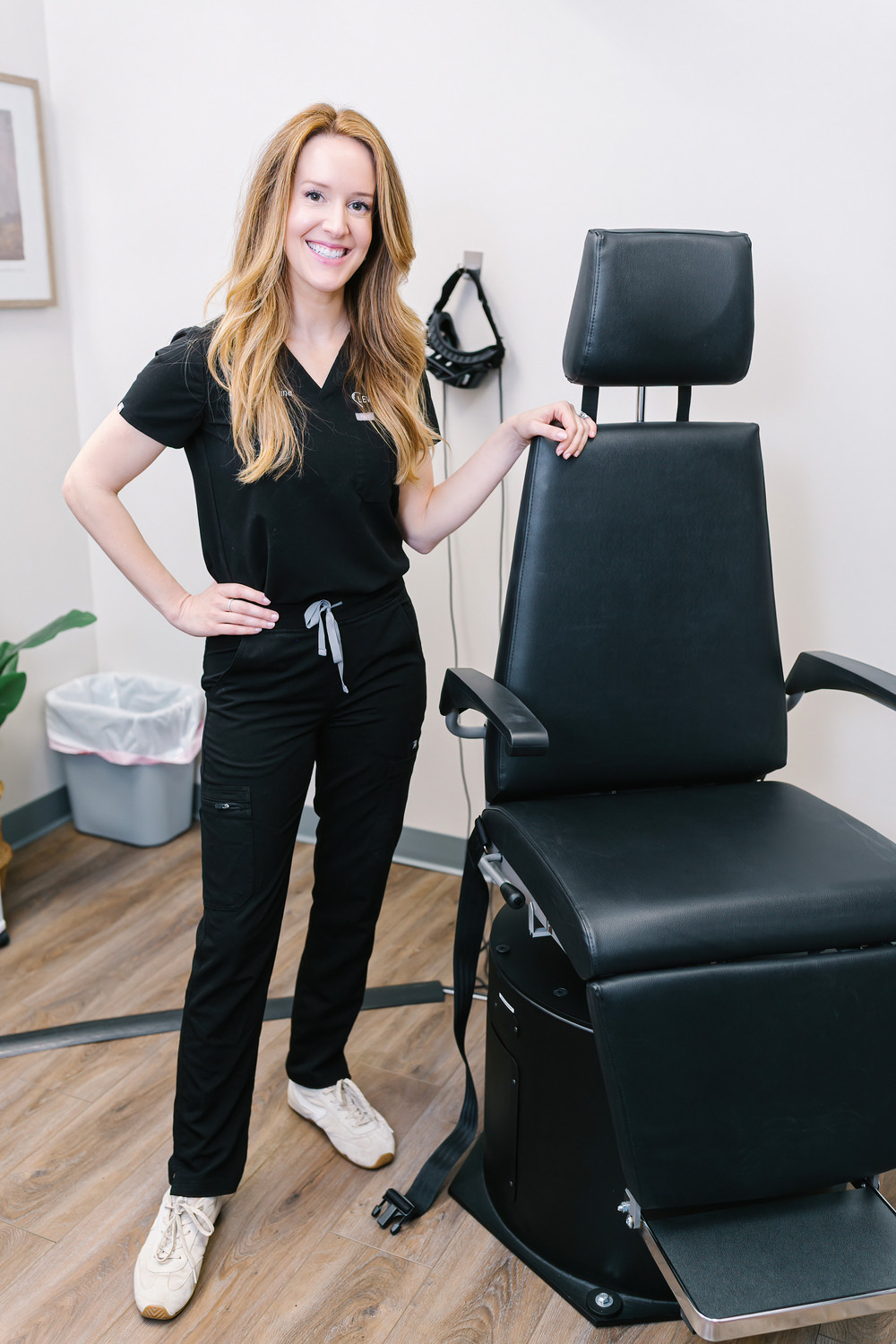
Dizzy? Feeling off balance? Does the room spin when you roll over in bed?
You don’t have to figure out what’s causing it on your own.
Levine Hearing provides comprehensive dizziness, vertigo and vestibular testing in Charlotte, NC to help determine whether your symptoms may be coming from the balance system of the inner ear.
Our vestibular program is led by Dr. Ellyn Grider, AuD, and Levine Hearing is an American Institute of Balance (AIB) accredited Center of Specialty Care.
Our team evaluates the connection between your ears, eyes and brain—three systems that have to work together continuously to keep you oriented and balanced.
Email Ma*****@***********ng.com directly if that’s preferable to calling.
Now accepting new patients. Our team can also help determine whether a referral is needed for your insurance.
Specialized Vestibular Care in Charlotte
Dizziness is a symptom—not a diagnosis.
Finding the source can require looking at multiple parts of the balance system and understanding how the inner ear, eyes and brain work together.
That’s why Levine Hearing developed a dedicated vestibular program.

Led by Dr. Ellyn Grider, AuD
Dr. Ellyn Grider serves as the lead audiologist for Levine Hearing’s vestibular program, with a clinical focus on evaluating patients experiencing dizziness, vertigo and imbalance.
Rather than beginning with the assumption that every dizzy patient has the same condition, Dr. Grider and our vestibular team start by listening carefully to the patient’s history and selecting testing based on the symptoms and clinical picture.
The goal is not simply to perform tests. It is to help answer an important question:
Could the vestibular system be contributing to what you’re experiencing—and what should happen next?
An American Institute of Balance Accredited Center of Specialty Care
Levine Hearing is proud to be an American Institute of Balance (AIB) accredited Center of Specialty Care.
The American Institute of Balance is a nationally recognized organization focused on vestibular and balance disorders and provides advanced education, training and clinical resources for professionals involved in vestibular care.
For our patients, our relationship with AIB reflects Levine Hearing’s commitment to maintaining a specialized vestibular program rather than simply offering balance testing as an add-on to a traditional hearing practice.
Could Your Dizziness Be Coming From Your Inner Ear?
Your inner ear does much more than help you hear.
It contains the vestibular system, a sophisticated group of organs that detects movement and head position and sends that information to the brain. Your brain combines those signals with information from your eyes, muscles and joints to help keep you balanced.
When those systems stop agreeing with one another, you may experience:
- Vertigo or a spinning sensation
- Feeling unsteady while walking
- Feeling as though you are rocking, floating or swaying
- Dizziness when rolling over in bed
- Dizziness when looking up or bending down
- Trouble walking in the dark
- Nausea associated with movement
- Frequent stumbling or falls
- A sensation that you may fall
- Difficulty focusing your vision while moving
- Ear pressure, tinnitus or hearing changes occurring with dizziness
Sometimes the cause is relatively straightforward. Other times, determining why someone is dizzy requires testing several different parts of the balance system.
That’s why comprehensive vestibular testing matters.
Wondering whether your symptoms warrant testing?
CALL OUR BALANCE TEAM: (704) 540-3081
We’ll help you determine the appropriate next step.
Charlotte’s Comprehensive Balance & Vestibular Testing Center
Levine Hearing was founded in Charlotte in 2015 with a focus on understanding the relationship between the ear and the brain.
As our practice grew, we saw another major need in Charlotte: patients experiencing dizziness and vertigo often struggled to determine where to begin.
In 2022, Levine Hearing expanded to include advanced vestibular diagnostics so that patients and referring physicians could obtain more information about how the inner-ear balance system is functioning.
Today, under the leadership of Dr. Ellyn Grider, AuD, our vestibular team evaluates patients referred by physicians throughout the Charlotte area as well as patients who call us directly because they are experiencing dizziness, vertigo or imbalance.
Rather than relying on one test alone, we select testing according to your symptoms and clinical history.
Testing may include:
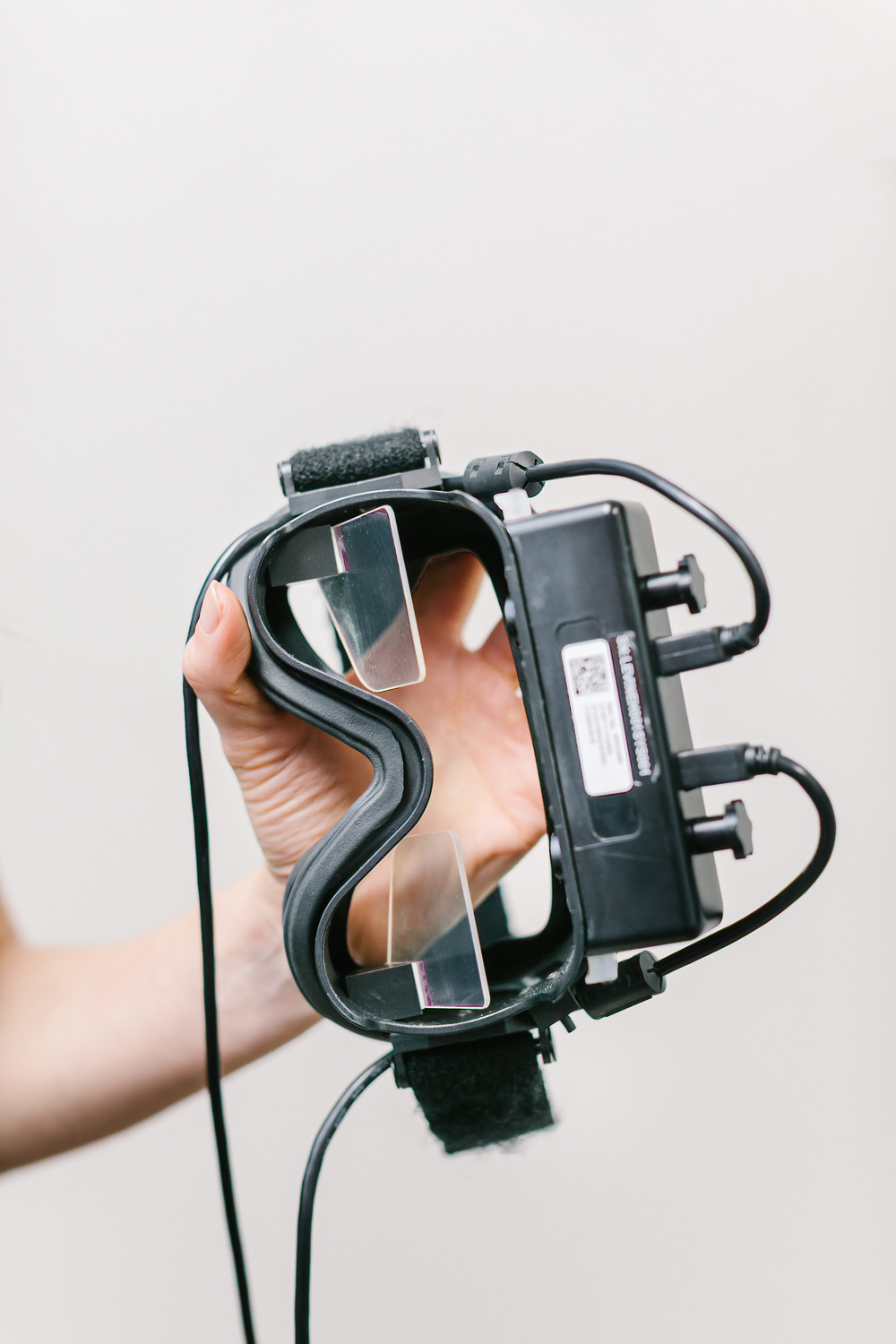
Videonystagmography — VNG
VNG evaluates specific eye movements that provide important information about the relationship between the eyes and vestibular system.
Rotary Chair Testing
Rotational chair testing allows us to evaluate how the vestibular system responds to controlled movement and can provide information that cannot always be obtained from VNG alone.
Caloric Testing
Caloric testing evaluates each ear’s response independently and can help identify differences in vestibular function between the two sides.
VEMP Testing
Vestibular Evoked Myogenic Potential testing evaluates additional portions of the inner-ear balance system, including the otolith organs and associated vestibular pathways.
Hearing Testing
Hearing and balance share the same inner-ear neighborhood. Changes in hearing, tinnitus or pressure combined with dizziness can provide important diagnostic clues.
BPPV Evaluation
If your dizziness occurs with specific movements—especially rolling over in bed, lying back, looking upward or bending over—we may evaluate you for benign paroxysmal positional vertigo, commonly called BPPV.
Does the Room Spin When You Roll Over in Bed?
This particular symptom deserves its own section because it is one of the most common things patients search online.
If you experience a sudden spinning sensation when you:
- Roll to one side in bed
- Lie backward
- Sit up from bed
- Look upward
- Bend down
- Turn your head quickly
you may have BPPV — benign paroxysmal positional vertigo.
BPPV occurs when tiny calcium carbonate particles normally located in one portion of the inner ear become displaced and enter one of the semicircular canals.
The resulting signals can make your brain believe you are moving when you aren’t.
The good news is that BPPV is often treatable with specific repositioning maneuvers performed in the office.
Think you may have positional vertigo? Call us.
Our team can help determine whether a focused BPPV appointment or more comprehensive vestibular evaluation is appropriate.
Not All Dizziness Feels Like Spinning
One of the biggest misconceptions about vestibular disorders is that you need to experience dramatic vertigo to have a balance-system problem.
You don’t.
Patients describe dizziness in many different ways:
“I feel like I’m walking on a boat.”
“I feel off when I’m walking through the grocery store.”
“I’m fine sitting down, but I don’t trust myself when I’m standing.”
“My eyes can’t keep up when I turn my head.”
“I don’t feel dizzy exactly. I just feel unsteady.”
“I keep reaching for walls or furniture.”
Those distinctions are important. Your description of when the sensation occurs, what triggers it and how long it lasts can provide valuable diagnostic information.
That is why your appointment begins with a detailed history rather than immediately putting you through a standardized battery of tests.
What Happens During a Balance Evaluation?
Your evaluation is designed around your symptoms.
1. We listen first.
We’ll discuss what you are experiencing, when it began, what triggers it, how long episodes last and whether you have associated symptoms such as hearing changes, tinnitus, ear pressure, headaches or nausea.
2. We evaluate your hearing and balance systems.
Your audiologist selects testing based on your clinical history rather than assuming every dizzy patient has the same problem.
3. We put the results together.
Individual vestibular tests examine different portions of an interconnected system. The goal is to understand the pattern across your results.
4. We explain what happens next.
Depending on your findings, the next step may include treatment in our office, vestibular rehabilitation, additional medical evaluation or coordination with another healthcare provider.
We don’t expect you to know which test you need. That’s our job.
Conditions That Can Cause Dizziness or Vertigo
There are many possible causes of dizziness. Some involve the vestibular system and some do not.
Conditions our testing may help evaluate include:
BPPV
Brief episodes of positional vertigo caused by displaced particles within the inner-ear balance system.
Vestibular Neuritis
Inflammation affecting the vestibular nerve, often resulting in sudden and significant vertigo.
Labyrinthitis
Inflammation involving the inner ear that can affect balance and may also affect hearing.
Ménière’s Disease
A disorder commonly associated with episodes of vertigo along with fluctuating hearing loss, tinnitus and/or ear fullness.
Vestibular Hypofunction
Reduced function of one or both vestibular systems, which may cause imbalance, difficulty seeing clearly during head movement and instability while walking.
Mal de Débarquement Syndrome
A persistent rocking, bobbing or swaying sensation sometimes occurring after prolonged travel or motion.
Other Causes
Dizziness can also result from medications, blood-pressure changes, migraine, neurologic conditions, cardiovascular conditions, vision problems and other medical issues.
Vestibular testing is therefore not about assuming that every case of dizziness comes from the ear. It is about determining whether—and how—the vestibular system may be contributing.
Why Choose Levine Hearing for Dizziness & Balance Testing?
Led by a Dedicated Vestibular Audiologist
Our vestibular program is led by Dr. Ellyn Grider, AuD, with a clinical focus on patients experiencing dizziness, vertigo and imbalance.
American Institute of Balance Accredited
Levine Hearing is an American Institute of Balance accredited Center of Specialty Care, reflecting our commitment to specialized vestibular education, testing and patient care.
Advanced Vestibular Diagnostics in One Charlotte Practice
The balance system is complex. Different tests evaluate different portions of it, which is why a more complete diagnostic approach can be valuable.
Specialists in the Ear-Brain Connection
Hearing and balance depend on the brain’s ability to interpret information arriving from the inner ear. Understanding that Ear-Brain Connection is central to how we approach patient care.
Longer, Thoughtful Appointments
Dizzy patients frequently arrive after seeing multiple providers. We want to understand the entire story rather than rush through it.
Coordination With Your Healthcare Team
When additional medical treatment or rehabilitation is appropriate, your results can help guide referrals and communication with the physicians and therapists involved in your care.
Independent Charlotte Practice Since 2015
Levine Hearing has cared for Charlotte-area patients since 2015, with a focus on making specialized hearing and balance care more understandable, personal and accessible.
Do I Need a Referral?
Call us first—even if you’re not sure.
Referral requirements can depend on your insurance.
Levine Hearing accepts several major insurance plans and also offers self-pay options. Traditional Medicare patients seeking vestibular testing generally require a physician referral, and our team can help facilitate that process.
You do not need to navigate the process by yourself.
Tell us you’re calling about dizziness, vertigo or balance testing, and we’ll help determine what you need before the appointment.
What Should I Expect at My Appointment?
Comprehensive vestibular evaluations may take approximately 90–120 minutes, depending upon the testing your audiologist determines is appropriate.
Before your appointment, we’ll provide specific preparation instructions.
These may include instructions regarding:
- Food before testing
- Alcohol before testing
- Certain medications that can affect vestibular test results
- Eye makeup or facial products that interfere with recording eye movements
Do not stop prescription medication unless you have been specifically instructed that it is medically appropriate to do so.
We’ll send your individual instructions before the appointment.
What If I’m Not Dizzy the Day of My Test?
Come anyway.
Many vestibular disorders are intermittent. You do not necessarily need to be experiencing an episode during your appointment for vestibular testing to provide useful information.
Your symptom history and objective test results are considered together.
I’ve Already Seen Several Doctors. Can You Still Help?
Absolutely.
In fact, we commonly see patients who have already discussed their symptoms with primary care, ENT, neurology, physical therapy or other specialists but still need additional information about the vestibular system.
Our role isn’t to replace those providers.
It is to answer a very specific question:
How well is the inner-ear balance system functioning, and could it be contributing to what you’re feeling?
That information can be an important piece of the puzzle.
Frequently Asked Questions About Dizziness & Vertigo
What’s the difference between dizziness and vertigo?
Dizziness is a broad term that can include lightheadedness, imbalance, floating, rocking or disorientation.
Vertigo specifically describes a false sensation of movement—often described as you or the room spinning.
Can an audiologist evaluate vertigo?
Yes. Audiologists are trained in the assessment of hearing and vestibular function. Vestibular testing can evaluate the inner-ear balance organs and their interaction with eye movements and the brain.
Can you treat BPPV?
When testing confirms BPPV and treatment is appropriate, repositioning maneuvers can often be performed to move displaced particles out of the affected semicircular canal.
Do you offer VNG testing in Charlotte?
Yes. Levine Hearing provides VNG and additional vestibular testing at our Charlotte office.
Do you offer rotary chair testing?
Yes. Rotary chair testing is one of the advanced vestibular tests available through Levine Hearing when clinically appropriate.
Can dizziness be related to hearing loss or tinnitus?
Sometimes. Because the hearing and balance organs are both located within the inner ear, certain disorders can cause a combination of dizziness, hearing changes, tinnitus or ear pressure. Hearing testing is therefore an important component of many vestibular evaluations.
What if my testing shows the problem isn’t coming from my ear?
That is useful information too.
A good diagnostic evaluation doesn’t exist simply to confirm a vestibular disorder. It can also help your healthcare providers decide what should be investigated next.
Ready to Find Out What’s Making You Dizzy?
You shouldn’t have to keep guessing.
If you’re experiencing vertigo, dizziness, imbalance, unsteadiness or unexplained falls, call Levine Hearing and tell us what you’ve been feeling.
Our vestibular program, led by Dr. Ellyn Grider, AuD, provides advanced testing with the personalized approach Levine Hearing has brought to Charlotte since 2015.
We’ll help determine the appropriate appointment and whether your insurance requires a referral.
Levine Hearing
3135 Springbank Lane, Suite 100
Charlotte, NC 28226
Now accepting new patients.



Levine Hearing
3135 Springbank Lane Ste 100
Charlotte, NC 28226
Friday: 8:00 AM - 12:00 PM
 call now