






Levine Hearing Is An Independent Clinic Offering All Brands of Hearing Aids
Levine Hearing Is An Independent Clinic Offering All Brands of Hearing Aids
Thank you for helping us help people hear better and feel better.
This means that we are not affiliated with just one hearing aid brand. This is important. A hearing aid alone is just a widget that is only as good as the provider selecting and programming it. Our independence allows us to look at you as a whole person with communication needs that may need a hearing aid as a piece of the overall puzzle.
When hearing aids are purchased from many of the large nationwide chains, only one brand of hearing aid is offered, and the aids you purchase there can only be reprogrammed at that chain, which could be referred to as “locked”. At Levine Hearing, you can find the same products, produced in the same labs as the big chains, but they are “unlocked”. This puts the patient in control. If you are not happy with our service, you can have the hearing aids reprogrammed at a number of other clinics. It also means that if you move out of town, your hearing aids can still be serviced.
Madison Levine chooses her products very carefully to be sure that she is providing the best value to her patients. If you are looking for the very best in Charlotte hearing aids and expect exceptional customer service, then look no further than Levine Hearing. Phonak, Starkey, Resound, Oticon, Siemens (Signia), Widex and many other brands are represented because Levine Hearing is independent.

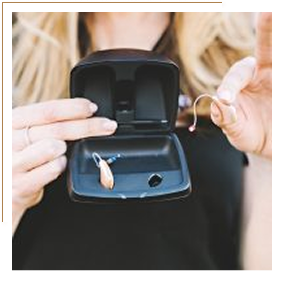
New releases like the Starkey OMEGA AI rechargeable hearing aids can operate for 50+ hours on a single charge and are quite literally waterproof. The Phonak Infinio Ultra is known for its incredible background noise suppression. The Widex Allure is dearly loved by musicians and music lovers for its natural sound. We identify the right devices that will give YOU the sound you are looking for, whether it is Starkey, Widex, Phonak, Oticon, Resound, Signia, Resound or any other brand. Our providers ask a lot of questions about your lifestyle needs and budget requirements to ensure that you receive the best hearing aid model and the best course of auditory rehabilitation for you.
How Do You Know Which Hearing Aid Is Best For Me?
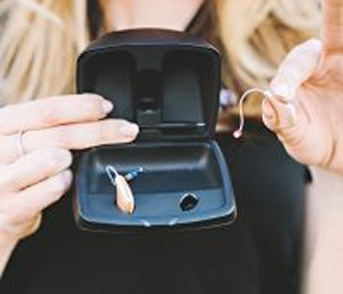
After a very thorough case history and thorough hearing exam, your provider will start to put together the picture of which hearing aid could benefit you the most. It is important to note that the hearing aid itself is only one piece of the puzzle. There are many hearing aid brands that are making excellent products, but they will only be as good as the diagnostics and the programming that are applied to them. This is where your provider’s expertise really comes into play. It can be compared to buying a beautifully designed musical instrument but if you don’t know how to play it and play it well, then it will never live up to its potential. It is important to Madison that the whole team is up to date on the newest hearing aid technology and that they are also thoroughly up to date on best practice fitting techniques.
What Does it Mean to Use Best Practices in Hearing Care?
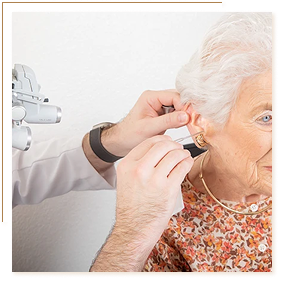
“Best Practices” is a term that the audiology profession uses to describe the methods of diagnostic testing and hearing aid programming that have been backed by reputable research to deliver the best results for patients. Examples of best practices include using speech testing in every hearing exam. How you can hear a beep or tone only tells us so much and we want to get to the heart of the issue you are experiencing, which most commonly includes how you are understanding speech. It also means testing how you are hearing in a noisy environment. We use Speech-in-Noise testing to understand the degree of difficulty that you are experiencing in the real world. Additionally, when it comes to fitting hearing aids appropriately, there are many foundational decisions that your audiologist will need to make. One of these is considering the correct acoustic coupling for you aid to your ear. This can mean creating a custom mold that fits your ear precisely from an ear impression that we make of your ear in the office. It would not be a best practice hearing aid fitting without the use of Real Ear Measurements (REM) using equipment that calibrates the hearing aid’s amplification precisely to your ear canal and hearing loss. This is one the most important tests that can be run on your hearing aids.
- Otoscopy
- Audiometric testing with masking
- Ultra high frequency testing as needed
- Speech Recognition Testing
- Speech-in-Noise Testing
- Real Ear Measurements
- Tinnitus pitch and loudness matching
- Tympanometry



 call now